Misted thermopanes
Foggy windows? Often it's the thermopane, not the frame
Plenty of Halifax mornings are damp, and the windows show it. Fog can sit on the outside of the glass, on the room side, or between the panes, and only the last means something has failed. A thermopane, also called a sealed unit, thermal unit or IGU, is two panes sealed at the edge with dry gas between. When that edge lets go, the glass mists from inside. We connect you with an independent local glass pro to tell you which fog it is and price the fix.
- Often just the glass, not the window
- Defog, new unit or new window, laid out evenly
- Honest about made-to-order waits

Where the fog sits
Outside, room side or between the panes: where the fog sits
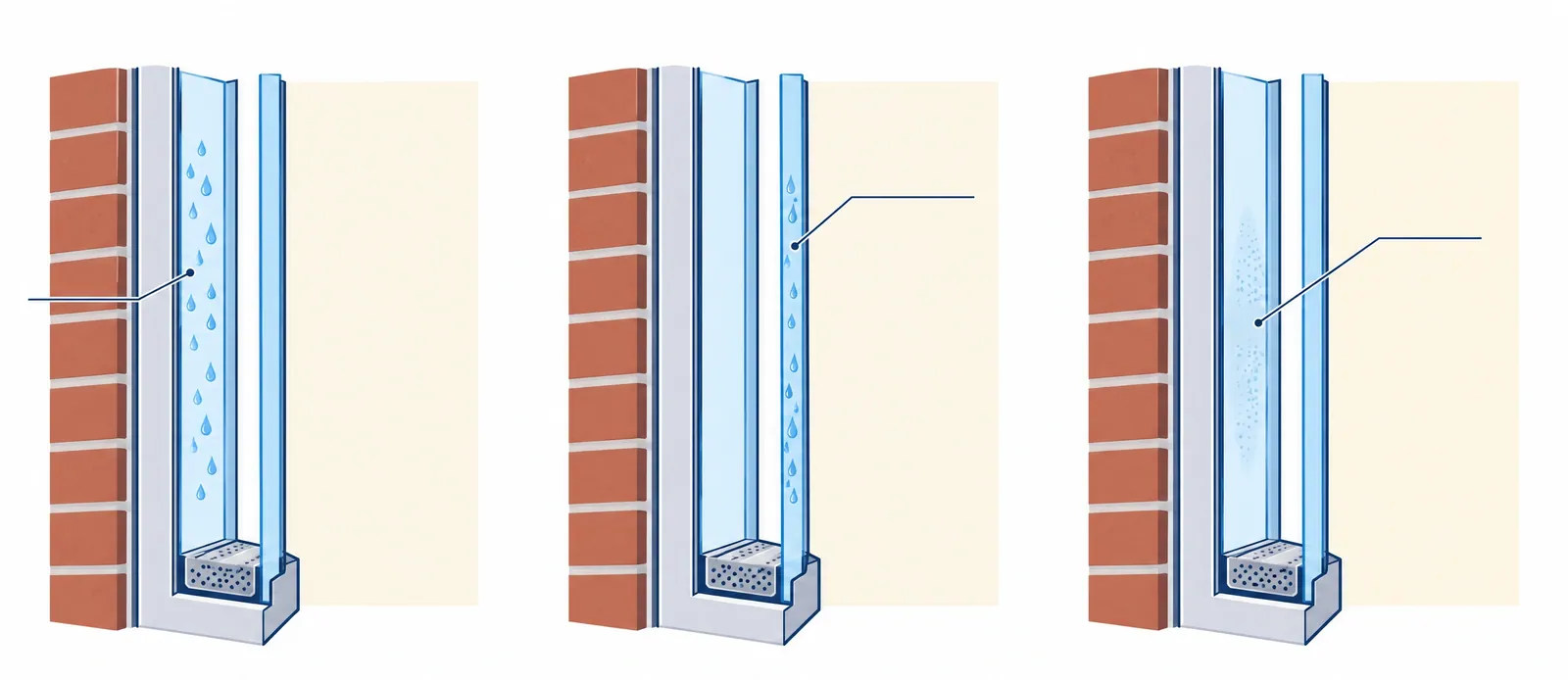
Look on a grey morning and again mid-afternoon; where the moisture sits tells you most of it. Cracked rather than misted? See broken window glass.
On the outside of the glass
Dew on the outer pane on a still, humid morning is common in HRM, more so inland toward the airport. It usually means the thermopane is keeping the heat in, so the outer pane stays cool enough for dew. It burns off as the day warms.
On the room side
Indoor humidity meeting cold glass: showers, cooking, laundry drying inside, a bedroom shut up all night. It wipes off, and a fan or a window cracked open usually sorts it. The glass is fine.
Between the panes
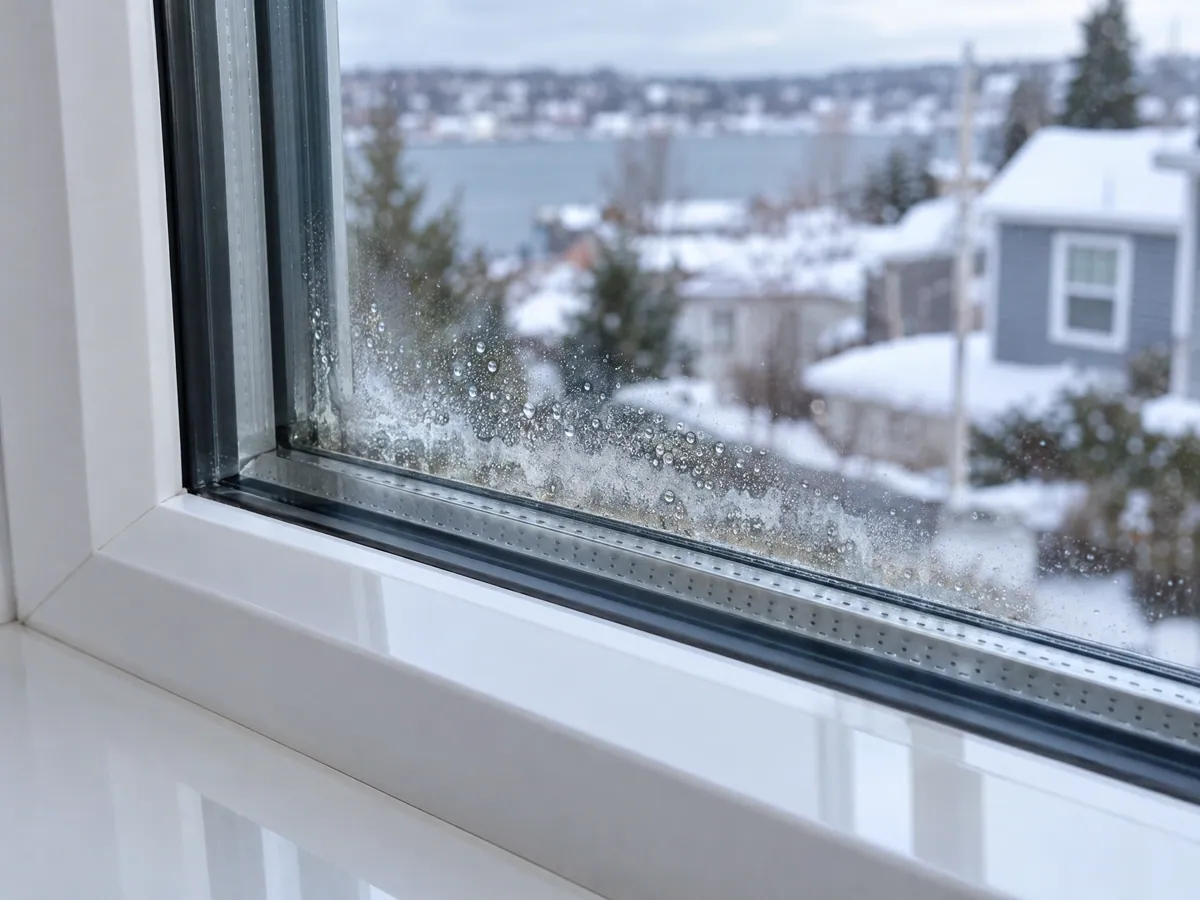
Haze, droplets or a white film you can't reach from either side. Early on it clears on dry days and returns on wet ones; later it leaves a stain. The thermopane has lost its seal.
Why now
Why so many HRM thermopanes are failing now
HRM's housing came in waves. After the older stock, a big one went up through the 80s and 90s, built with thermopanes from day one. A lot of that glass has reached the age when edge seals commonly give out, which is why misted units keep turning up in subdivisions of that era.
The coast adds to it. The seal flexes each time the glass warms and cools, and Halifax gives it plenty of practice: many days that swing across freezing, wind on big panes, and rain sitting in frames with clogged drain holes.
The swap
How a thermopane swap works
If the frame and sash are sound, only the glass unit changes. Expect two visits with a wait between them.
Measuring
The pro records the glass size, the unit's thickness and how it's held in, and notes what the old unit had: tempered glass, a low-E coating, grilles between the panes. The new one should match its neighbours.
Ordering the unit
Thermopanes are made to order for your opening, not pulled off a shelf. Clear units generally come back sooner than tempered, shaped or specialty glass. Ask how long yours is likely to take before you book.
Fitting it in your frame
The old unit comes out, the frame is cleaned and checked for water damage, and the new thermopane is set on blocks, sealed and held in with the stops. Trim, paint and hardware stay as they were.
Three options
Defogging, a new thermopane or a new window: what each one does
HRM argues about this one, and most businesses sell one side. Here is each option, plainly.
Defogging
A defogger drills the glass, flushes and dries the gap, then plugs the holes. It can clear a unit that isn't badly stained and keeps the original glass. It doesn't restore the gas fill or the factory seal. Ask what's guaranteed.
A new thermopane
The failed unit is replaced in the existing frame, with a new seal and gas fill, often with a low-E coating the old one lacked. It suits a sound frame. It won't help a frame that's rotting or leaking.
A new window
Frame, sash and glass all change. It suits a failing frame or units that keep misting, and it's the only one of the three that can qualify for the Efficiency Nova Scotia rebate.
Illustration
A bay with one fogged unit
In a bay, one unit often mists while its neighbours stay clear. Only that one needs to change.
Repair the glass or replace the window?Check the frame
When the frame is the real problem
New glass needs a frame that can hold it. Press the sill and the bottom corners of the sash. Soft wood, paint bubbling over something spongy, or a vinyl frame that has sagged means water has been getting in.
If units in one window keep misting, look at the drainage before paying for glass again. Sometimes the answer is a window repair, sometimes a new window. Fogged patio door glass follows the same logic; see sliding door repair.
What affects the quote
What affects the price of a new thermopane
Every unit is made to size, so there's no set price. A pro will ask about:
- Size and shape, including big picture units and arched tops
- Glass type: clear, low-E, argon-filled, tempered or obscure
- Grilles between the panes that need to match
- Glazing stops, tape or a sash that has to be removed
- Access: upper storeys, stairwells, or a storm window in front
- The frame's condition
One wide photo, one close-up of a glass corner and a tape-measure size are usually enough for a first quote.
Rebates
Rebates: why Efficiency Nova Scotia won't cover glass-only swaps
Efficiency Nova Scotia's window rebate is for complete ENERGY STAR windows, frame and all, installed in the gap between a first and a final home energy assessment. Swapping only the thermopane falls outside it. The current rules are in the Efficiency Nova Scotia rebate guide.
That doesn't make a thermopane the wrong choice. It's usually the smaller job, and giving up the rebate is the trade-off. If several windows are going at once, price both routes.
Questions
Thermopane questions from HRM homeowners
Explore your options
If it isn't the thermopane
Misted thermopanes turn up across HRM, including Clayton Park, Sackville, Cole Harbour, Bedford and Dartmouth.
Send a photo of the misted unit and its size
A photo and a rough measurement are enough to start. They go to a local pro who does thermopane swaps, and we chase it up if nothing comes back.