Inland HRM
Windows for Fall River's lakeside homes
Out in Fall River, water on the windows on a still morning by Lake Thomas raises the first question: is it condensation, or has the thermopane lost its seal? Inland HRM runs damper and colder than the peninsula, so glass here fogs, frosts and beads up more often, and much of it means nothing is broken. We connect Fall River homeowners with independent local glass professionals once you know which problem you have, and we check your postal code to make sure a pro covers your part of the lakes.
At a glance
- Setting
- Lakeside homes around Lake Thomas and Fletcher Lake
- Climate
- Colder, snowier and foggier than the peninsula
- Rebates
- Efficiency Nova Scotia, for full-frame ENERGY STAR replacements only
- Coverage
- Checked by postal code before we match you
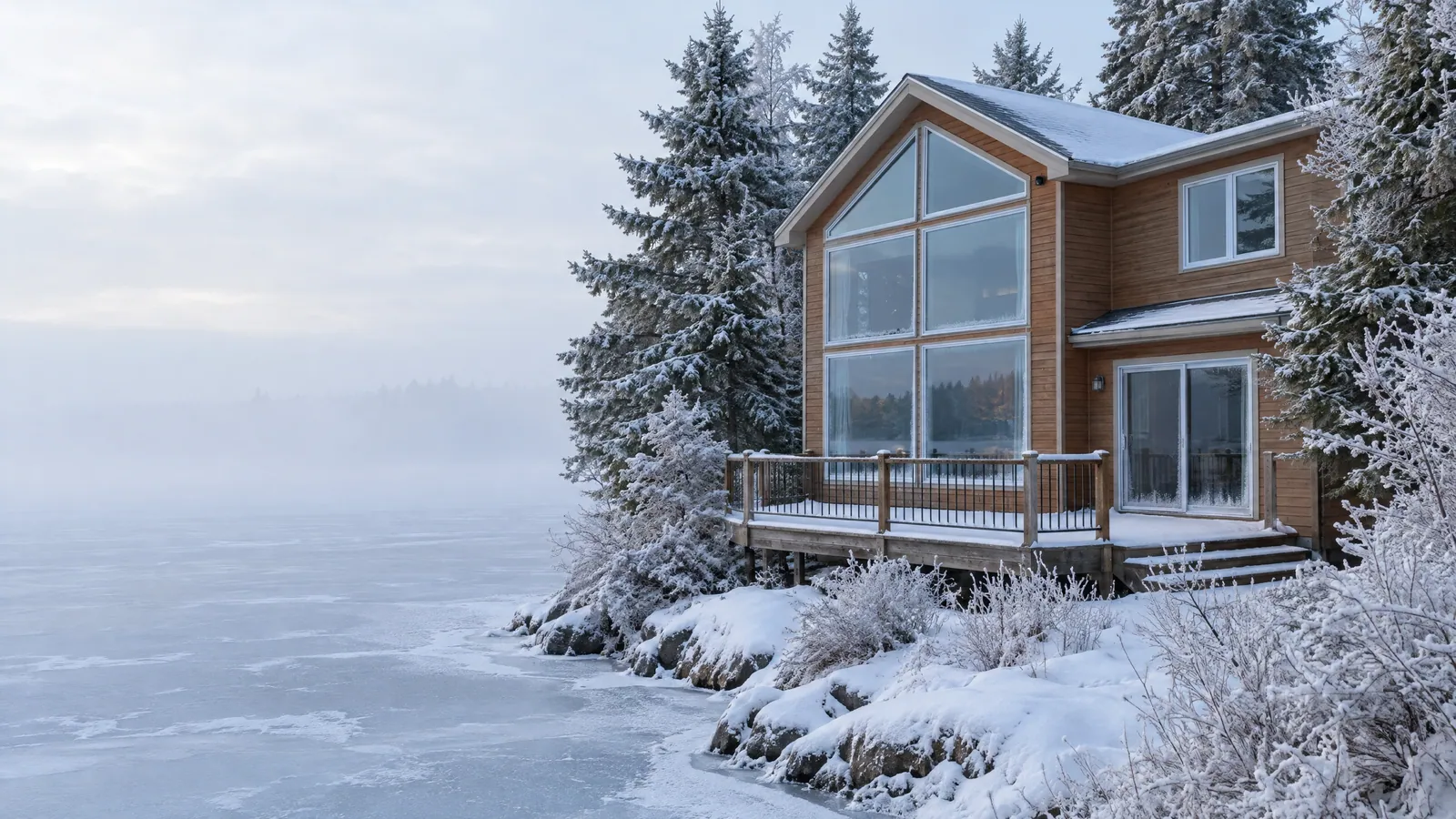
Lakeside living and inland weather
Fall River sits among lakes, Lake Thomas and Fletcher Lake among them, with the airport just up the highway. The airport's long-term weather records describe the inland climate well: a great many foggy days, very damp early mornings, colder winters, more snow and far more freezing rain than downtown.
For windows, that means more moisture on the glass and more freeze-thaw on sills and seals than a peninsula house sees. It doesn't mean your windows are failing. It means it's worth knowing which kind of water you're looking at before you pay anyone.
Condensation vs failed seals in a colder climate
Fog can sit in three places, and only one of them is a glass problem.
- On the outside. Dew on the outside of efficient glass on a damp morning is normal. Good glass keeps the outer pane cool, so it fogs like a windshield. It clears as the sun warms it.
- On the room side. Water or frost on the inside in winter comes from indoor humidity meeting cold glass. Run the bathroom fan, move air across the window and watch the humidity.
- Between the panes. Haze you can't wipe from either side means the thermopane has lost its seal.
For that last one, there are three fixes: a defog service, a new sealed unit in the existing frame, or a new window. Each suits a different house; our foggy window page sets them out evenly.
Energy upgrades and Efficiency Nova Scotia
Efficiency Nova Scotia offers a rebate on windows and doors, but read the conditions: the whole window, frame included, must be replaced with a unit that's ENERGY STAR rated in Canada, and the work has to happen between an initial and a final home energy assessment. A new sealed unit in an old frame doesn't qualify. The ENS rebate guide has the current rules.
HRM's HalifACT energy upgrade financing covers heat pumps and insulation, not windows. The general federal home grant has closed. If energy is the goal, pricing replacement windows through the assessment route is worth it; if the frames are fine, new glass is still a fair choice.
Same-size window replacement needs no HRM building permit, according to HRM's home improvement page; a bedroom window should still meet egress.
Popular services
- Foggy thermopanes: new sealed units once you're sure the fog is between the panes.
- Replacement windows: full-frame ENERGY STAR windows, the route that can qualify for the rebate.
- Patio door replacement: lake-facing sliders and garden doors that leak or frost at the sill.
- Window repair: cranks, locks and weatherstripping stiffened by damp and cold.
Nearby: Sackville and Bedford
We check coverage by postal code, since the lakes spread homes out and some roads fall outside a given pro's range. If nobody we work with covers your address for that job, we'll tell you. Toward the city, our Sackville page covers its 1970s and 80s houses, and Bedford's page covers the Basin side. The full list is on the service areas page.
Fall River questions
Why do my windows fog on the outside on lake mornings?
Because the glass is doing its job. Efficient windows keep indoor heat in, so the outer pane stays as cool as the morning air. On a damp, still morning by the lake, dew forms on it the way it does on a car. It clears as the day warms. Nothing is wrong with the seal.
Why do my Fall River windows get wet on the inside in winter?
Indoor air holds moisture from cooking, showers and breathing, and it condenses on the coldest surface it meets, which is usually the glass. Inland winters here are colder than on the peninsula, so it happens more. Use the kitchen and bathroom fans, keep blinds open a little for air movement, and watch indoor humidity. If it pools on the sill daily, ask a pro to check the window.
Is there a rebate or free program for new windows in Fall River?
There's no program that replaces windows for free. Efficiency Nova Scotia offers a rebate for replacing whole windows, frame included, with ENERGY STAR units between two home energy assessments. Glass-only fixes don't qualify, and HRM's HalifACT financing doesn't cover windows. Check the ENS rebate guide for current terms.
Do you cover homes around Lake Thomas and Fletcher Lake?
Around the lakes, roads wind and homes spread out, so we go by postal code, not by community name. Send yours, a line about the job and a photo. If a pro we work with takes that kind of job on your road, they get in touch to quote. If nobody does, you'll hear that from us instead of silence. Start a Fall River request.
Why do my windows fog up more than in the city?
Because inland air is damper and colder. The airport's weather records, the closest to Fall River, show a great many foggy days and very damp early mornings, and inland HRM runs colder than the peninsula. More moisture meeting colder glass means more condensation, inside and out. That's weather, not a failed window. Only haze trapped between the panes means the seal has gone.