Entrance doors · HRM
Entrance doors that open, close and lock the way they should
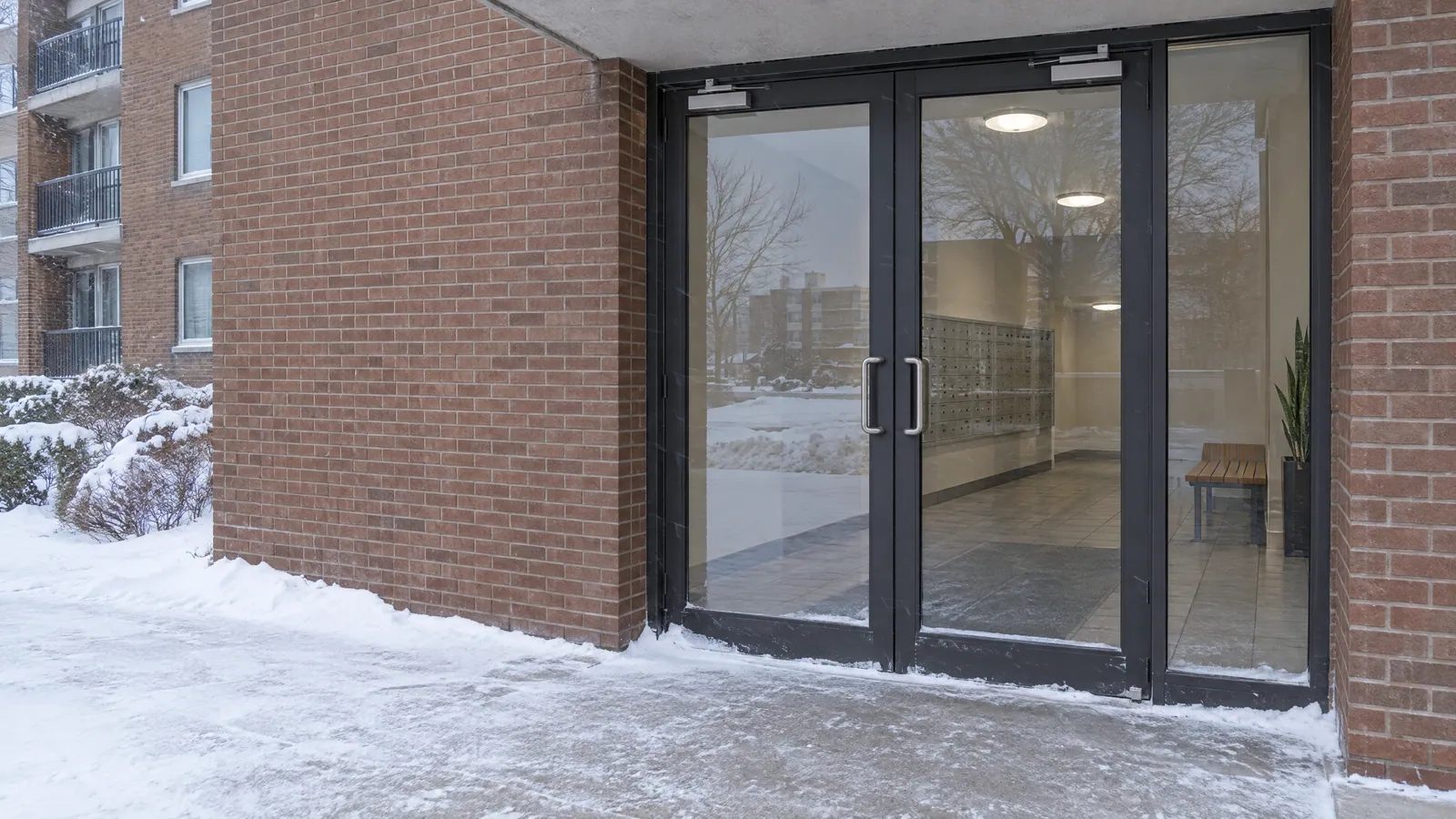
A typical commercial entrance is an aluminum frame with tempered glass, hung on pivots and held in check by a closer. It takes every customer, every delivery, and a harbour wind that tries to pull it out of your hand. When it starts to slam, drag or miss the latch, it's usually one worn part. We connect shops, offices, clinics and apartment buildings with independent commercial glass pros, and we follow up so the request doesn't go quiet.
- Closers, pivots and locks fixed on their own
- New glass in the frame you already have
- Shops, offices and apartment lobbies
Door symptoms
Closers, pivots and hinges
The door usually tells you which part is tired.
Slams, or creeps shut
The closer controls the swing and the final push to latch. Many can be tuned at the adjustment valves. One that leaks oil or has no resistance left needs replacing.
Drags on the sill
A worn pivot or hinge lets the door drop on the latch side; loose frame anchors do the same. Caught early, it's a parts job. Left alone, it wears out the threshold too.
Blows open in a gust
Entrances facing the water or a windy corner get pushed hard. A weak closer or missing stop lets the door swing too far, bending the arm and straining the top pivot.
Hardware
Locks, panic hardware and handles
Aluminum doors use narrow locks set into the frame, push-pull handles and, on exits, panic hardware: the bar you push to get out. A sticking cylinder or a latch that won't catch is often one worn or misaligned part.
Exit doors have rules about how they must open, so the pro checks what the building needs before changing a panic bar. Access control or an alarm may need another trade.
Broken door glass
Glass replacement in entrance doors
A cracked door pane rarely means a new door.
Make the opening safe
Tempered glass breaks into small pebbles, and usually the whole pane comes down. Sweep up, keep people clear, and cover the opening until the new glass arrives.
Measure and order
Tempered glass can't be cut after it's made, so the pro measures and orders a pane to size. Ask for a realistic timeline with the quote.
Fit it in the existing frame
The glass sits behind removable stops and gaskets, so the door stays on its pivots. It's a good moment to check the closer. For house doors, see door glass replacement.
Apartment lobbies
Lobby doors in apartment buildings
Most HRM apartments are purpose-built rentals, so the lobby door is often the busiest door a landlord owns. Moving days and deliveries wear it hard.
A lobby door that won't close is a security problem and a draft at once. HRM's minimum-standards by-law expects doors in rental housing to be in good repair and weathertight, so sort it before winter. Managers can send several doors in one request; see glass help for landlords.
Automatic and push-button accessible operators mix glass, hardware and electrical work. The pro will confirm the scope, including whether another trade is needed. For shop windows and other building glass, see commercial glass.
Seasonal care
Keeping doors working through winter and storms
Strong wind is a regular part of the year here, more so at exposed entrances.
Before winter
Cold thickens closer fluid, so have it checked before the door stops latching. Keep salt and grit off the bottom pivot.
Before a storm
Check that the door latches fully and the stop works. Wind catching a half-open door bends closer arms. The hurricane season guide covers the rest of the building.
After a storm
If wind forced the door, check the arm, pivot and glass edges, and photograph any damage first. See storm-damaged glass.
Questions
Commercial door questions
Explore your options
Related commercial glass work
Pros take on entrance door work across HRM, including Downtown Halifax, Dartmouth, the West End and Bedford.
Tell us the door type and the problem
Shop, office or lobby door, what it's doing, and a photo of the top where the closer sits. We'll pass it to an independent commercial glass pro in HRM who quotes before any work starts.