Mirror walls · HRM
Full-wall mirrors for gyms, studios and basements
A mirror wall is mostly planning: how big, where the seams fall, what the wall is made of and how the weight is carried. We connect you with an independent glass pro in HRM who measures, quotes and hangs it, whether it's a basement home gym or a studio that runs classes all day.
- Home gyms and commercial studios
- Safety-backed mirror
- Concrete, block or drywall
At home
Home gyms and basement workout rooms
Nearly half the homes in HRM are single-detached houses, and a lot of home gyms end up in the basement. The wall might be concrete, block or drywall over the foundation, and the ceiling is often low, with ducts in the way.
For lifting and floor work you want to see your whole body move, starting just above the floor. For a bike, a narrower piece at eye level may do. Watch for damp: mirror on a basement wall that sweats can spoil from the back, so the pro may suggest a gap behind it or a framed wall.
Studios
Dance, yoga and fitness studios
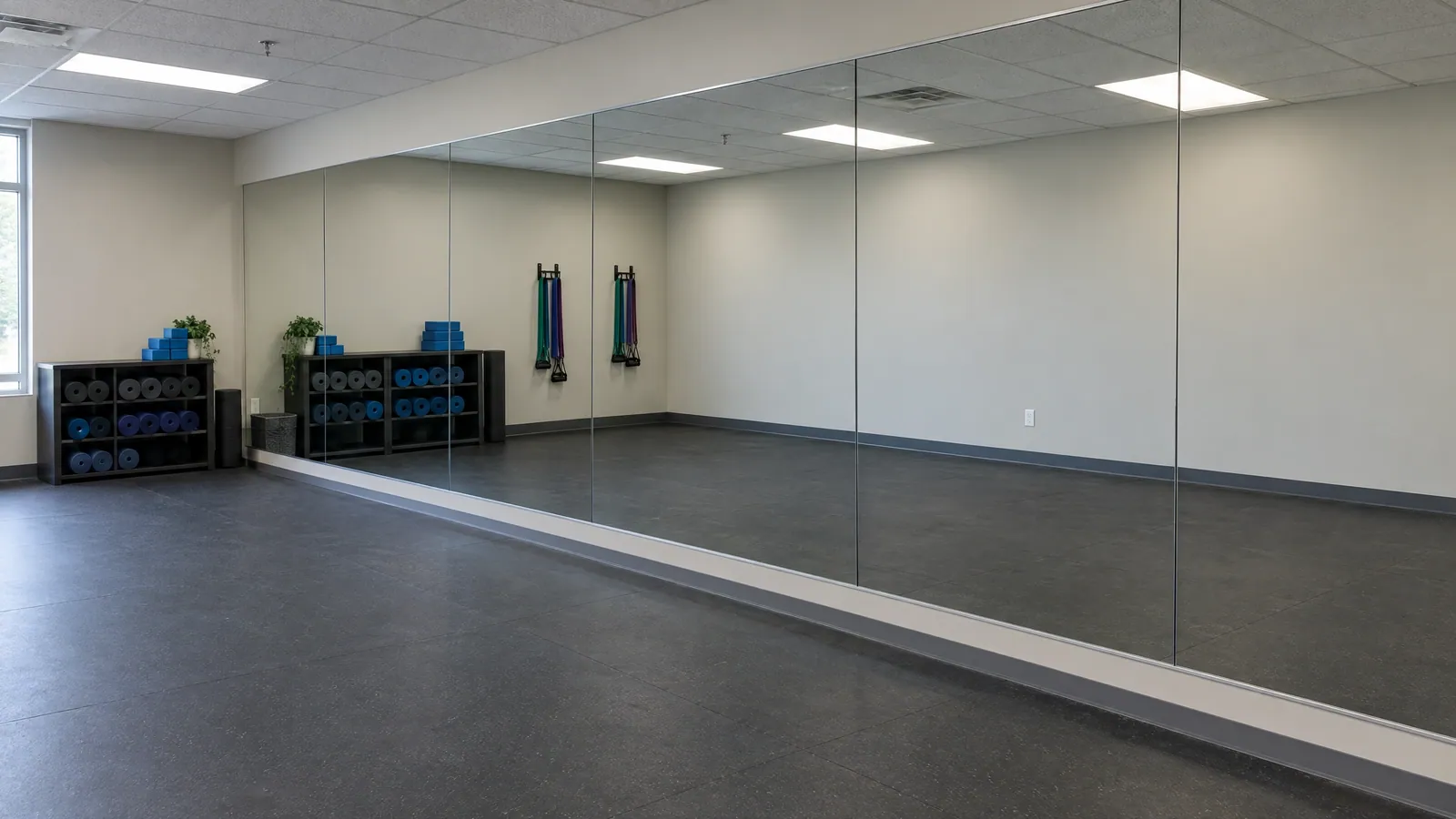
Studios run mirror edge to edge down a wall, with polished edges so the seams stay thin, set on a channel above the floor so mops and feet don't chip it. Safety backing and solid fixing are the norm, and a barre changes where fixings can go. In a leased unit, ask the landlord first. For storefronts and entrance doors, see commercial glass, or the full list of services.
Planning
Planning a mirror wall: seams, height and outlets
For a single vanity or hallway mirror, the mirrors page is the simpler read. A full wall goes like this.
Map the wall
Width, height and every outlet, switch, thermostat and casing. Each becomes a cut-out or a panel edge.
Place the seams
Big panels are hard to get down basement stairs. Seams are spaced evenly and kept away from where you'll stand.
Set the height
Usually from a channel just above the floor to as high as the ceiling or ductwork allows.
Check it's flat
A bowed wall shows as a wobble in the reflection, so the pro may shim or add a backer.
Safety and mounting
Safety-backed mirror and mounting options
Safety backing
A film that holds the pieces together if a mirror breaks. Worth it around weights, balls and kids.
Channels and clips
A bottom channel carries the weight, and clips hold the panel to the wall.
Concrete and block
Channel and clips are anchored into the masonry, with mirror adhesive only as a back-up.
Drywall
Fixings go into studs or blocking. Drywall alone isn't made to carry heavy mirror.
Renting?
Renters and condo owners: ask before you drill
A large share of HRM households rent. A mirror wall means holes and becomes a fixture, so get the landlord's okay in writing and agree whether it stays when you leave.
In a condo, changes to common elements need an owners' vote under the Nova Scotia Condominium Act, and whether your wall counts depends on the building's declaration. Ask the board first. Managing a building? See our page for landlords and property managers.
What affects the quote
Cost factors
If you'd rather hang panels yourself, a pro can cut mirror to size for pickup. The main drivers:
- Wall area and number of panels
- Thickness and safety backing
- Polished seam edges and cut-outs
- Wall type: concrete, block or drywall
- Access, and after-hours work for studios
Send the wall's width and height, a photo, and what it's made of if you know.
Questions
Mirror wall questions
Explore your options
Other glass jobs we can help with
Glass pros take on mirror walls in homes and studios across HRM, including Bedford, Sackville, Hammonds Plains, Fall River and Timberlea & Tantallon.
Send your wall size for a mirror-wall quote
Measure the wall, take a photo, and tell us whether it's concrete, block or drywall. We'll pass it to a local glass pro who does mirror walls, and they'll follow up with a quote and any questions about seams.